Debug (line 243 of ViewableData.php):
PageController created with a failover class of App\Pages\LandingPage
Debug (line 243 of ViewableData.php):
PageController created with a failover class of App\Pages\LandingPage
Debug (line 243 of ViewableData.php):
PageController created with a failover class of App\Pages\LandingPage
Debug (line 243 of ViewableData.php):
PageController created with a failover class of App\Pages\ResourcePage
Debug (line 243 of ViewableData.php):
Chrometoaster\ALOT\Controllers\ElementALOTController created with a failover class of Chrometoaster\ALOT\Models\Elemental\ElementALOT
Debug (line 243 of ViewableData.php):
ElementResponsiveImageController created with a failover class of ElementResponsiveImage
Debug (line 243 of ViewableData.php):
DNADesign\Elemental\Controllers\ElementController created with a failover class of ElementGeneralContent
Debug (line 243 of ViewableData.php):
ElementResponsiveImageController created with a failover class of ElementResponsiveImage
Debug (line 243 of ViewableData.php):
SilverStripe\Assets\Storage\DBFile created with a failover class of SilverStripe\Assets\Image
Debug (line 243 of ViewableData.php):
SilverStripe\Assets\Storage\DBFile created with a failover class of SilverStripe\Assets\Image
BELS held two Professional Education Programmes this year for kaiako who support early childhood ākonga and their whānau.
Figure 1 – A graphic of the BELS team logo on the PEP 201 programme
The focus for 101 in June was whānau centred practice, and 201 in August was building on having a coaching mindset when working with kaiako and whānau. The feedback from kaiako has been outstanding.
Consistent “aha” moments from 101 was the principle of “noticing, recognising, responding and revisiting” and 100% of the 201 participants
responded that they had increased their knowledge around working in a routines based model as well as feeling that “as RTV we are using coaching in our practice, to a degree, but seeing how we could involve whānau and teachers by using a coaching mindset was inspiring.”
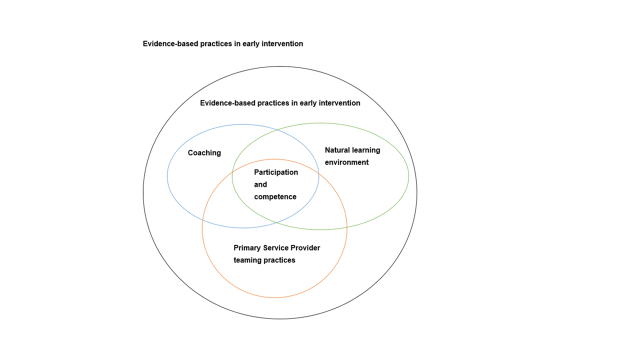
Figure 2 – A chart showing evidence based practices in early intervention